The Enigma of Argolis: Why the Pyramid of Hellinikon is Greece’s Most Underrated Ancient Site
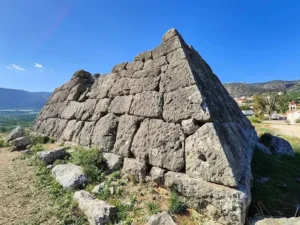
When most people think of Greece, they often picture famous landmarks like the Parthenon or the Lion Gate of Mycenae. However, tucked away in the quiet Argolic plain, near the small village of Hellinikon, is a site that challenges our understanding of ancient history: the Pyramid of Hellinikon. This structure, though smaller than its Egyptian counterparts, remains one of the most provocative mysteries of the Mediterranean.
A Historical Mystery: Is the Pyramid of Hellinikon Older than Giza?
For years, the Pyramid of Hellinikon has sparked intense academic debate. The ancient traveler Pausanias mentioned it in the 2nd century AD, describing the structure as a polyandria—a collective tomb for soldiers who died in a legendary battle for the throne of Argos. For centuries, this was the accepted story.
However, modern science has introduced an intriguing twist. In the 1990s, researchers at the Academy of Athens used thermoluminescence technology to date the limestone blocks. Their surprising findings suggest that the Pyramid of Hellinikon was built around 2720 BC. If this dating is accurate, it makes the structure as old as, or even older than, Egypt’s Great Pyramid of Khufu, forcing us to reconsider the technological exchange between ancient civilizations.
Architectural Genius of the Pyramid of Hellinikon
The Pyramid of Hellinikon showcases the remarkable “polygonal masonry” technique, a hallmark of Greek craftsmanship. Unlike the smooth-sided, symmetrical pyramids of the Nile, the Greek pyramids feature massive, irregularly shaped limestone blocks. These stones are carved to fit together with such breathtaking precision that they require no mortar to remain standing for millennia.
The structure’s base measures approximately 7 by 9 meters, with its walls sloping inward. While its exact purpose remains a subject of study—was it a monumental tomb, a military watchtower, or a sacred sanctuary?—its strategic location is undeniable. You can find more detailed archaeological data on the Ministry of Culture’s official portal. Overlooking the ancient route that connected Argos to Tegea, the Pyramid of Hellinikon served as a sentinel for the Bronze Age rulers who dominated the Peloponnese.
Beyond the Beaten Path: Visiting the Pyramid of Hellinikon
Visiting the Pyramid of Hellinikon offers a travel experience far removed from the typical tourist circuit:
The Energy of Silence: Unlike the crowded archaeological parks, at the Pyramid of Hellinikon, you can enjoy a rare solitude with history.
A Mythical Connection: The site is part of a larger, legendary landscape. Close by are the Springs of Lerna, the site where Hercules famously battled the multi-headed Hydra.
Unfiltered History: Standing before these weathered blocks, you witness Greece’s raw, unedited history, preserving its authentic, mysterious character.
Discover the Unexplored with Porto Planet
At Porto Planet, we believe the true essence of Greece lies in its well-kept secrets. History isn’t just about the world-famous monuments; it includes the hidden paths and the untold stories of sites like the Pyramid of Hellinikon.
Are you ready to go beyond the guidebooks? Whether you want to follow in Hercules’ footsteps or unravel the mystery of the Pyramid of Hellinikon, we specialize in crafting the perfect, personalized journey.
Don’t just visit Greece—discover it.
Contact Porto Planet today to plan your expert-led historical adventure. Let us take you where the crowds end, and the true mysteries begin.
Private tours in Crete offer the ultimate way to discover an island that is a world of its own—a continent in miniature where ancient myths meet modern sophistication. At Porto Planet, we redefine luxury by focusing on authenticity, privacy, and seamless execution. To truly “touch” the soul of this place, you need more than a map; you need a key to the hidden doors.
Authentic Private Tours in Crete: From Shepherds to Artisans
To understand the island, you must leave the coast and head to the mountains. Our Shepherd for a Day experience is a centerpiece of our private tours in Crete. Whether in the White Mountains of Chania or near Mount Psiloritis in Heraklion, you will walk in the footsteps of locals, learn the ancient art of cheese-making in a traditional “mitato,” and taste the famous antikristo lamb cooked over an open fire.
For those who find beauty in craftsmanship, our Rethymno Clay Workshop offers a tactile connection to the land. This journey combines the meditative art of pottery with a curated tasting of Cretan honey and olive oil.
Heraklion: Exploring History with Private Tours in Crete
Heraklion is a historic fortress city with layers of civilization. As the gateway to the Minoan world, it holds secrets that span millennia. According to UNESCO, the Minoan Palatial Centres represent a pinnacle of ancient culture.
The Heraklion Food Experience: One of our highlights is the signature Food Tour in Heraklion. This is a deep dive into the edible history of the island, a must-do during your private tours in Crete. Led by local experts, you will wander through the vibrant central market, tasting artisanal cheeses like graviera.
For History Enthusiasts: The Venetian Siege & Cuisine Tour blends military architecture with traditional flavors, revealing the city’s resilience.
Cultural Immersion: Our City Tour with Museums provides exclusive access to the Archaeological Museum and the Musical Instrument Museum.
Historical Odysseys & Sacred Paths
Our specialized private tours in Crete honor the island’s deep spiritual and historical connections through meticulously designed itineraries.
ANZAC Day 2026: We are proud to organize the ANZAC Day Greece Tour 2026, a deeply moving journey for those who wish to honor the legacy of the ANZACs in Greece.
In the Footsteps of Apostle Paul: Follow a sacred path with our Footsteps of the Apostle Paul in Crete tour, visiting the historic harbor of Kali Limenes, where early Christianity took root.
Venetian Legends: Explore the 15th-century maritime route with the Footsteps of Pietro Querini in Crete, bridging Venetian history with local myths.
Culinary Excellence & Wellness
The Cretan diet is the gold standard for longevity, as noted by the Mayo Clinic. Our 7 Days Unforgettable Culinary & Culture tour—one of our most popular private tours in Crete—focuses on private vineyard visits and exclusive farm-to-table dining.
Why Choose Porto Planet for Private Tours in Crete?
As your specialized DMC in Greece, we provide a level of service that transforms a trip into a lifelong memory. Our commitment to unmatched luxury includes:
Seamless VIP Logistics: Travel in comfort with our premium Mercedes-Benz vehicles.
Exclusive Access: From private yacht cruises to “closed-door” artisan workshops.
Expert Local Knowledge: Our guides are real storytellers who bring the island’s history to life.
Experience the unmatched luxury of our private tours in Crete. Your personalized odyssey starts with Porto Planet.
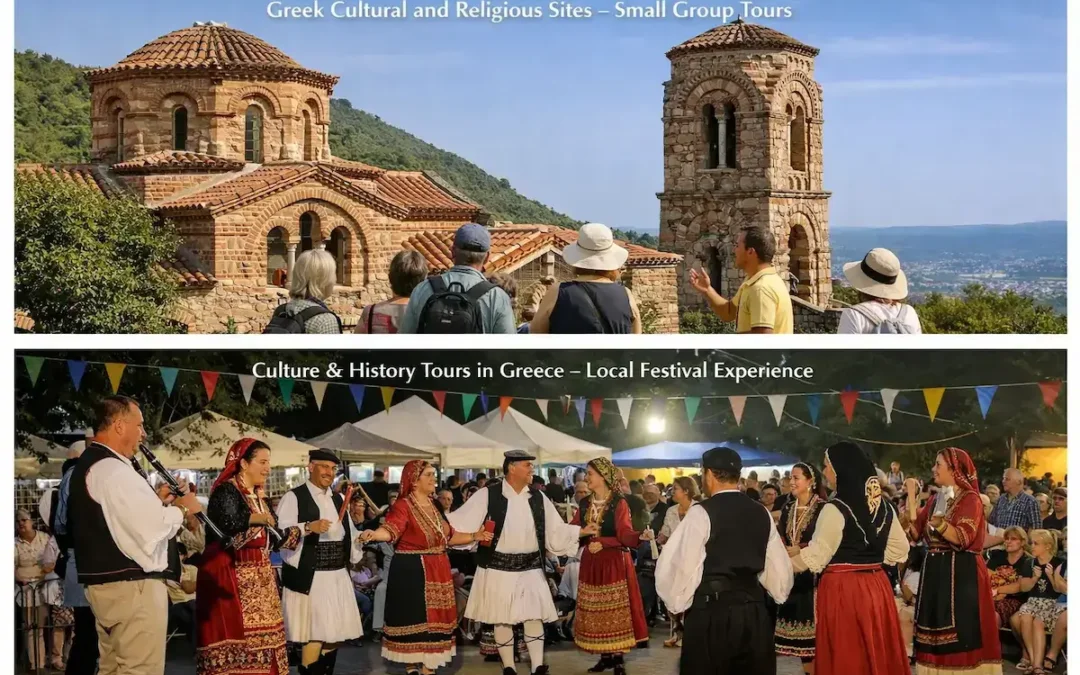
Culture, History & Religious Tours in Greece offer travelers immersive journeys through ancient sites, sacred landmarks, and local traditions. Provide travelers with a deeply immersive way to explore the country’s heritage, sacred sites, and traditions. Porto Planet designs personalized journeys across Greece, connecting visitors with authentic historical, cultural, and spiritual experiences through slow, carefully curated itineraries. These experiences are ideal for travelers seeking meaningful connections with local communities, hands-on learning, and a deeper understanding of Greek history, religion, and culture.
Authentic Cultural & Religious Experiences Across Greece
Greece is a living museum, where every region tells a story through its monuments, religious sites, and local traditions. From the monasteries of Meteora to the ancient theaters of Epidaurus, Porto Planet’s cultural tours offer experiences that go far beyond traditional sightseeing. Guests participate in guided explorations, storytelling sessions, and immersive encounters with local communities to understand the history, mythology, and spiritual practices that shaped the country.
Travelers may attend traditional festivals, engage in local ceremonies, or explore centuries-old villages with expert guides who bring each site to life. Whether walking through Byzantine churches, visiting Ottoman-era landmarks, or exploring UNESCO-listed heritage sites, every itinerary is designed to create meaningful and memorable experiences.
Explore Greece’s Sacred Sites and Historical Landmarks
Our tours focus on authenticity, giving travelers time to absorb, photograph, and reflect on the cultural significance of each site. Guests can visit ancient temples, historic monasteries, archaeological parks, and local museums, learning the stories and traditions that have been preserved for generations.
Highlights may include:
Exploring the spiritual heart of Athens beyond the Acropolis, including hidden chapels and local religious rituals
Discovering sacred sites across Crete and the Peloponnese, where ancient myths and historical events intertwine
Touring regional museums with local historians who explain the social, cultural, and religious context behind artifacts
These curated journeys ensure travelers gain a rich understanding of Greek culture and history while enjoying a thoughtful, unhurried pace.
Small-Group & Private Tours Tailored for You
Porto Planet specializes in small-group and private travel, offering personalized itineraries for cultural enthusiasts, history buffs, and spiritual travelers. Each tour includes concierge-level service, private transfers, and carefully selected boutique or luxury accommodations, ensuring a seamless and comfortable experience.
Every detail is meticulously planned: local guides, exclusive site access, and thoughtfully timed visits allow travelers to enjoy Greece’s culture without the distractions of overcrowded sites. Guests can immerse themselves in the traditions, rituals, and daily life of local communities in a way that larger tours cannot provide.
Designed for Cultural Enthusiasts & Travel Professionals
Whether you are a passionate traveler, a history lover, or a travel professional seeking bespoke experiences for your clients, Porto Planet’s cultural, historical, and religious tours offer something unique. These experiences combine education, relaxation, and cultural immersion, leaving travelers with a lasting connection to Greece’s living traditions.
Pietro Querini is the Venetian nobleman who in the early summer of 1431 in Chania, Crete embarks on a ship loaded with wine and spices, and a crew of 68. They are off to Flanders. Instead, they end up shipwrecked at Røst in Lofoten, Northern Norway.
“I, Pietro Querini from Venice, have promised myself to write down exactly, for the memory of posterity, the adversities that have befallen me and the places where they have happened to me according to the dispositions of the wheel of fate. You must know that driven by the desire to acquire honor and riches, I invested my belongings to set up a ship for a trip to Flanders. On April 25, 1431, I left Crete for this journey, which turned out to be very bitter and full of misfortunes.
My state of mind was sad for the loss of my son, and full of pain, as if it were already a premonition of the many and unbearable misfortunes that would come. Pietro Querini was a Venetian Patrician in the 15th century, a member of the powerful Querini family, and a member by right of Serenissima’s Great Council. He was Lord on the Island of Candia (Crete) and owned the fiefs of Castel di Termini and Dfnes, famous for the production of Malvasia Wine, which he traded especially with Fiandre. Bound for Bruges in Flanders in 1431, his merchant ship encountered a terrible storm off the western coast of France. The storm ravaged the ship, and the sailors had to take to lifeboats. (more…)
Wine in Ancient Greece was an integral part of daily life. It was consumed during meals, religious ceremonies, and social gatherings. The Greeks also believed that wine had medicinal properties and was often used as a form of medicine. Additionally, wine played a significant role in Greek mythology and was associated with the worship of the god Dionysus. Overall, wine held great cultural and symbolic importance in Ancient Greek society.
Wine in Ancient Greece and its presence during ancient meals and banquets were essential, where it was plentiful. However, the ancients did not consume wine in the same way we do today. They diluted it not only with sweeteners but also with seawater, avoiding untempered wine. They considered the water-to-wine ratio important, typically diluting it with half or three parts water to two parts wine. Depending on the season, the water used was either lukewarm or cold, and sometimes ice cubes were added, obtained from mountains and preserved in straw, as chilled wine was considered a luxury. They also utilized cool wells as refrigerators and stored snow in special bins to chill the wine and water. (more…)
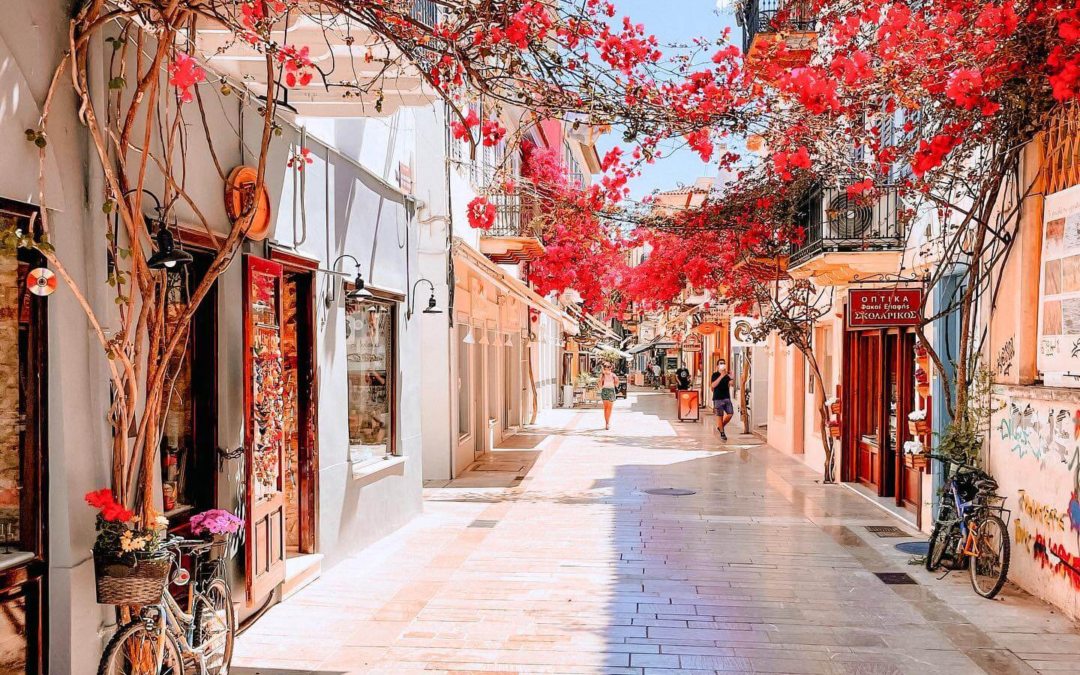
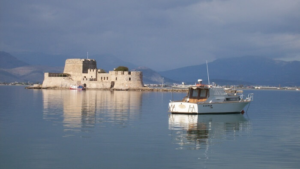
Nafplio is a beautiful town in Greece that was the first capital of the modern Greek state. It is named after Nafplios, son of Poseidon. It is home to Palamidis, their local hero of the Trojan War and supposedly the inventor of weights and measures, lighthouses, the first Greek alphabet, and the father of the Sophists. Although the capital moved to Athens, the city of Nafplio attracts visitors daily because of its rich history and beauty. It is like a living museum where you can admire the Venetian fortress of Palamidi, the Acronafplia with its stunning vista of the Argolic Gulf, and the fortified islet of Bourtzi. It’s as lively as any city in Greece, making it a popular destination for Greek and foreign tourists. (more…)